


The Genesis of a Climate Vision
For Hakan, collaboration across governments, business, and civil society is the only path where economic growth and environmental stewardship advance together.
Climate Resilience: The Conquest of the Seven Summits
Hakan Bulgurlu set out on a mountaineering journey with the ambition of climbing the highest peaks on each continent. His journey began with Aconcagua, Mount Elbrus in Russia, and Carstensz Pyramid—each ascent strengthening his discipline and deepening his perspective.
As this ambition took shape, he turned his gaze to Mount Everest, the world’s highest and most unforgiving peak, as a deliberate decision to turn an extreme human experience into a platform for climate awareness.
Climbing Everest in 2019 via the Nepal–China route during one of the mountain’s most demanding seasons, he used the scale and visibility of the mountain to draw attention to the urgency of the climate crisis and the responsibility it demands —an experience he later captured in his first book, A Mountain to Climb.

Responsible Business: Lessons from Antarctica
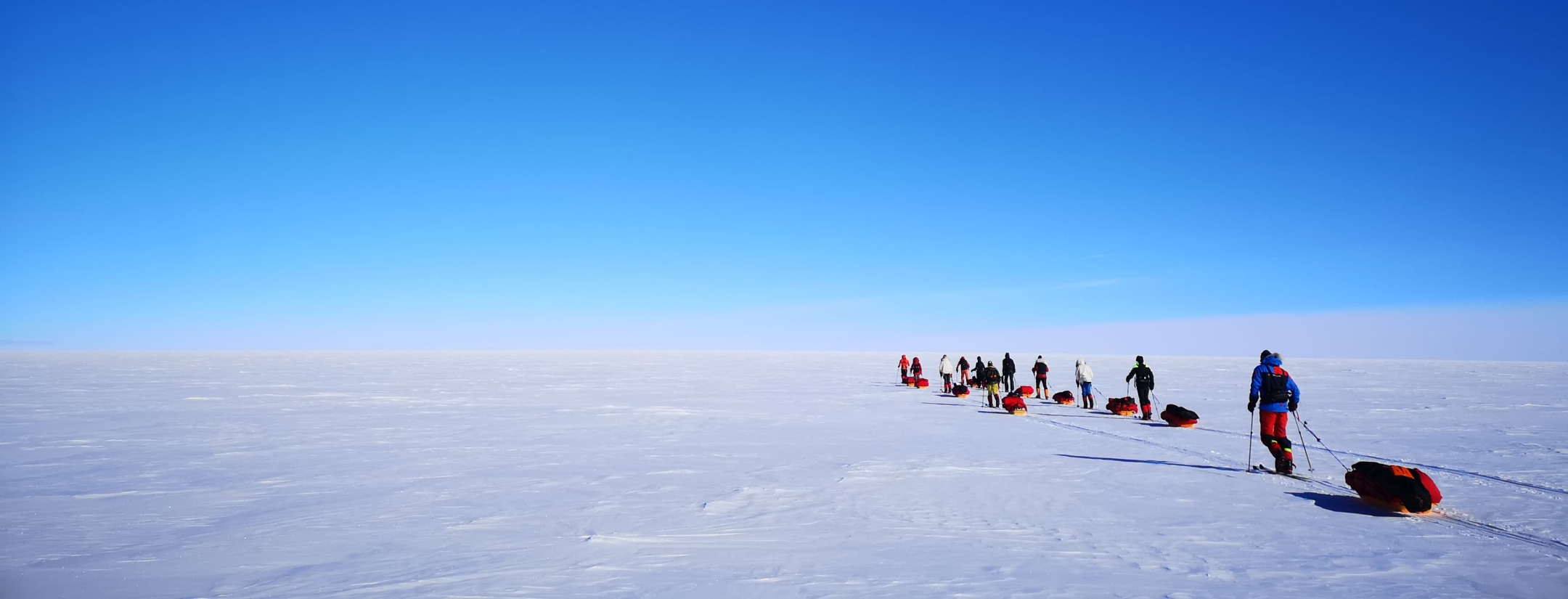
That journey reached a new dimension in Antarctica, the world’s coldest and most isolated continent—and one of the clearest indicators of the climate crisis, warming nearly five times faster than the global average.
Witnessing landscapes of overwhelming beauty and alarming vulnerability made one truth unmistakably clear: what happens in the most remote corners of the planet is inseparable from everyday life.
Bulgurlu repeatedly emphasizes a simple but urgent reality: it is not only the ice that is thinning, but our window for action. Retreating ice shelves, rising sea levels, and disrupted ecosystems are not distant scenarios; they are signals of consequences already unfolding across economies, communities, and lives.
This sense of urgency extends beyond advocacy into action. As a business leader, a father, and a global citizen, Bulgurlu views climate responsibility as inseparable from how industry must evolve. Drawing on his Antarctic expedition, he came together with leading scientists to research and document the accelerating impacts of climate change—work that forms the foundation of his forthcoming book, On Thin Ice, scheduled for release in 2026.
Energy Transition: Leadership at the Point of Delivery
Translating climate urgency into business action defines Bulgurlu’s leadership approach. At Beko, sustainability is not positioned as an adjunct to growth, but as a driver of long-term competitiveness. The company has accelerated decarbonization across its operations, scaled energy-efficient technologies, and embedded climate targets into decision-making—demonstrating that industrial performance and environmental responsibility can advance together.
This strategic shift has earned international recognition, with Beko featured by institutions such as TIME and the Dow Jones Sustainability Indices, and its climate commitments validated through Science Based Targets aligned with the 1.5°C pathway. As Bulgurlu consistently emphasizes, the energy transition demands execution over rhetoric: clear targets, disciplined investment, and leadership willing to move ahead of regulation rather than wait for it.
For Bulgurlu, optimism is not passive hope, it is built through proof. Proof that systemic change is possible when innovation, accountability, and scale converge; and proof that businesses, across both emerging and developed markets, can play a decisive role in shaping a more resilient, low-carbon future.
Circular Economy: Industrializing Sustainability
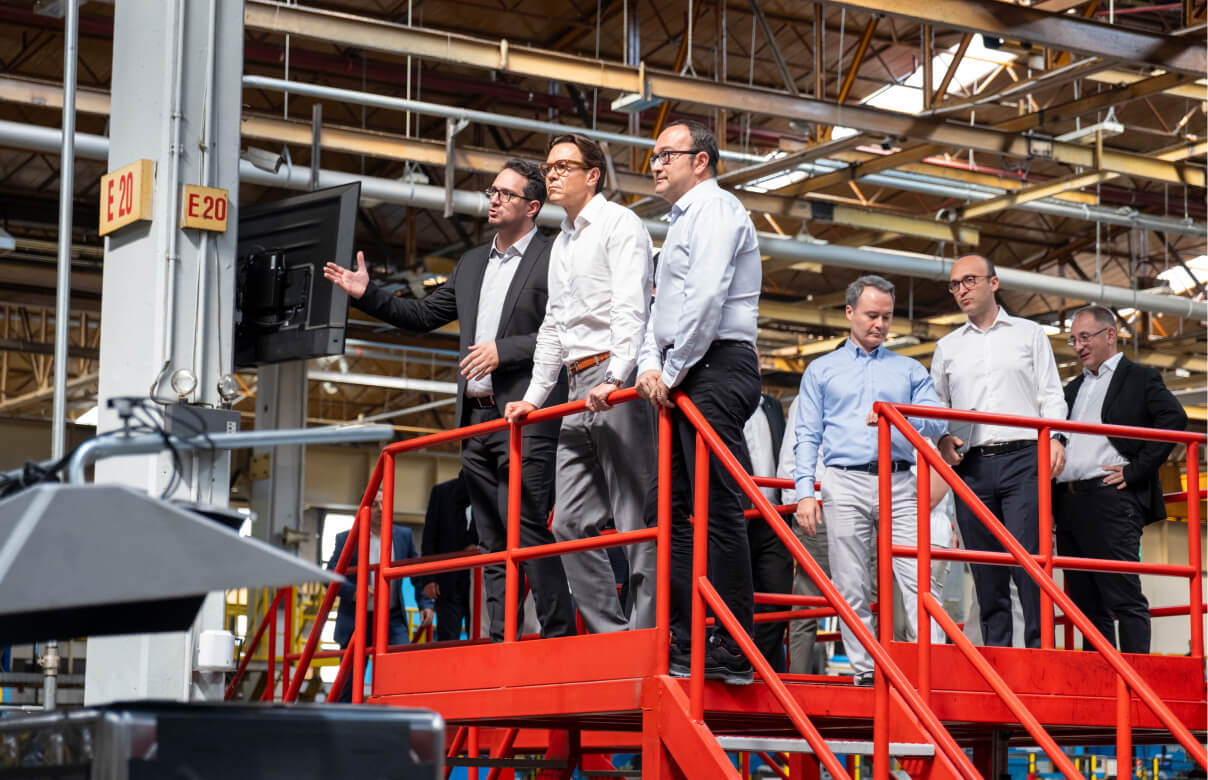
Circularity is another pillar where Bulgurlu’s leadership translates sustainability into operational reality. At Beko, the circular economy is embedded through factory-scale refurbishment and zero-waste manufacturing models that extend product lifecycles while improving affordability.
Through its Reduce–Refurbish–Recycle programme, Beko has transformed returns and repairs into an integrated industrial process—giving appliances a second life and preventing valuable materials from ending up in landfill. In 2024 alone, refurbishment centres in the UK, Italy, and Romania reintroduced more than 114,000 appliances into the market, resold at up to 30% below standard retail prices—demonstrating that circular solutions can simultaneously reduce waste and expand access to essential home technologies.
These operations are anchored by lighthouse facilities recognized within the World Economic Forum’s Global Lighthouse Network, reflecting leadership in sustainable, tech-enabled production. From zero-waste-to-landfill plants such as Peterborough to an expanding refurbishment network across Europe, Beko is scaling circularity as a core industrial capability rather than a standalone initiative.
Across expeditions, authorship, and executive leadership, Bulgurlu’s work is guided by a single conviction: responsibility must translate into action at scale. Whether navigating the extremes of the planet or leading industrial transformation, he consistently links observation to execution—turning climate urgency into measurable outcomes. For him, leadership today is defined not by intent, but by the ability to align purpose, performance, and long-term impact.